Micro-Vacations for Stress Relief: 3-Minute Breaks That Actually Work
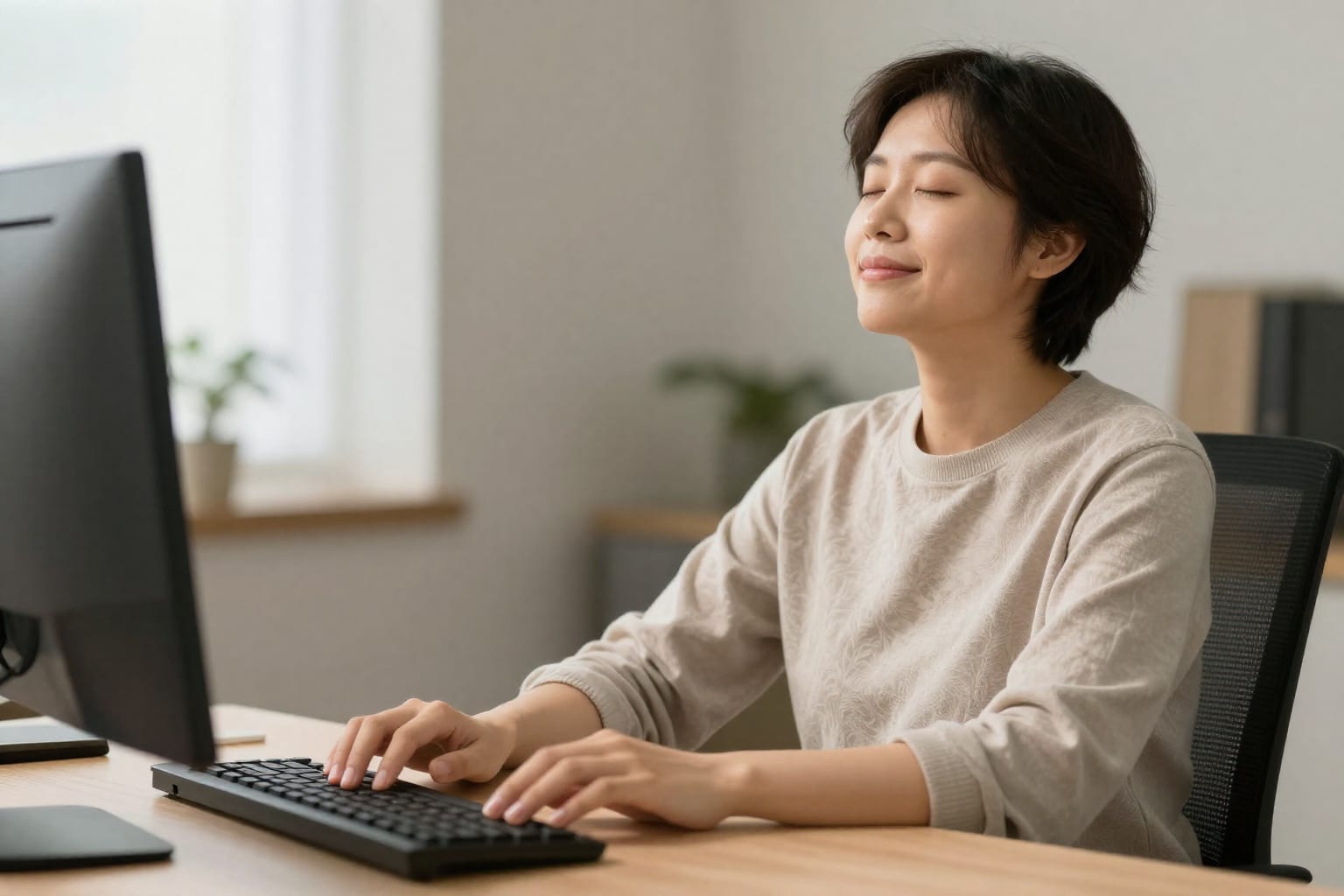
I was mid-email, staring at a blinking cursor, when I noticed my shoulders had migrated somewhere near my ears. The clock said 2:47 PM. I had a call in ten minutes, a deadline in an hour, and a headache that was already setting up camp behind my left eye. I knew I needed a break. But a real break—leaving my desk, going for a walk, doing something restorative—felt impossible. So I did the only thing I could: I closed my eyes, took three slow breaths, and pretended I was on a beach. It took maybe ninety seconds. And when I opened my eyes, the cursor was still blinking, but the headache was gone and my shoulders had dropped. That's when I realized that micro-vacations for stress relief were not just a nice idea. They actually work.
In this article, I'll show you exactly why these three-minute breaks can be so effective, outline the three methods that have saved my own sanity more times than I can count, and share the common mistakes that can make them fall flat. By the end, you'll have a practical toolkit you can start using today—without leaving your chair.
Why 3-Minute Micro-Vacations Work (The Science of a Short Break)
Our brains are not designed for sustained, high-level focus. Research from the American Psychological Association consistently shows that taking short, intentional breaks throughout the day can reduce fatigue, improve cognitive performance, and lower stress markers like cortisol. The key word here is intentional. A three-minute break where you scroll through social media or check email is not a break—it's just a different type of stimulation. A true micro-vacation gives your prefrontal cortex a moment to reset, allowing your parasympathetic nervous system (the rest-and-digest branch) to kick in.
Physiologically, even 60 seconds of deep, slow breathing can shift your heart rate variability from a stress-dominant pattern to a more relaxed one. And because the brain's attention span naturally waxes and wanes in roughly 90-minute cycles (the ultradian rhythm), taking a micro-vacation every 90 to 120 minutes aligns with how your body already wants to work. You're not forcing a square peg into a round hole—you're working with your own biology.
I used to think I didn't have time for breaks. Then I realized that a three-minute micro-vacation costs almost nothing in terms of lost productivity, but the return—in clarity, calm, and reduced stress—is enormous. It's not about adding something to your day. It's about subtracting the tension.
How to Do a Micro-Vacation Right: 3 Methods That Actually Work
Over the years, I've tried dozens of quick relaxation techniques. Some were too complicated (who has time for a guided visualization with a full script?), others too passive (staring at a blank wall just made me think about my to-do list). The three methods below have survived my own real-world testing—they're simple, effective, and can be done in three minutes or less. Each targets a different pathway to relaxation: your senses, your movement, or your perspective.
Method 1: The Sensory Reset (Engage Your Senses to Shift Your State)
This is my go-to when I'm stuck at my desk and can't physically leave. The idea is to deliberately engage one or more of your senses in a way that signals safety and calm to your nervous system.
Step 1: Pick one sense to focus on. For me, it's often touch: I'll hold a cold glass of water against my palm or run my fingers over the smooth edge of my desk.
Step 2: For 60 seconds, attend only to that sensation. Notice the temperature, the texture, the pressure. If your mind wanders, gently bring it back.
Step 3: If you have a second sense available (like the sound of a fan or the smell of coffee), layer it in. But stick to no more than two—overloading can backfire.
I once had a colleague who kept a small vial of lavender oil in her drawer. She'd open it, take three deep breaths, and cap it again. It took maybe 45 seconds. She swore by it. I've since adopted a similar trick with peppermint—it wakes me up without caffeine.
Method 2: The Mini-Mindfulness Walk (Even If You Never Leave Your Desk)
A full walking break is ideal, but when you can't get outside, a mini-mindfulness walk works wonders. It's not about distance—it's about intention.
Step 1: Stand up (even if it's just for a moment). If you can, walk to the restroom or a water cooler. If not, simply take three slow steps in place.
Step 2: Pay attention to the physical sensation of walking: the weight shifting from heel to toe, the air moving against your skin, the sound of your footsteps.
Step 3: As you walk, silently note three things you can see that you hadn't noticed before—a crack in the wall, the pattern on the carpet, the color of a colleague's mug. This pulls your brain out of rumination mode and into present-moment awareness.
I once timed myself. From standing up, walking to the kitchen, filling my water bottle, and walking back, it was exactly two minutes and forty seconds. The shift in my mental state was immediate. The stress didn't vanish, but it lost its grip.
Method 3: The Gratitude Glance (Reframe Your Moment with One Thought)
This method is the most mental, but it's also the most portable. It's perfect for those moments when you're stuck in traffic, waiting in a line, or in the middle of a tense conversation.
Step 1: Look at something that evokes a positive memory or feeling. It could be a photo on your phone, a plant on your desk, or even a mental image of a favorite place.
Step 2: For 60 seconds, hold that image in your mind and let yourself feel the associated emotion—gratitude, warmth, amusement, peace.
Step 3: If your mind starts to drift to work or stress, gently redirect it back to that one positive anchor.
I keep a photo of my dog on my phone's lock screen. In the middle of a stressful afternoon, I'll glance at it for ten seconds. That's it. It's not a full meditation—it's a quick emotional reset that costs almost nothing but can change the trajectory of the next hour.
When to Take a Micro-Vacation (And How to Remember)
Knowing what to do is only half the battle. The real challenge is remembering to do it when you're in the thick of a stressful day. Here's what I've learned from trial and error:
Best timing: Take a micro-vacation right after a stressful event (like a tense phone call or a difficult email), before a high-stakes meeting (to lower your baseline arousal), and every 90–120 minutes as a preventive measure. I've found that the 90-minute mark is when my focus starts to fray—that's my cue.
Memory tricks: Set a repeating timer on your phone or computer. I use a gentle chime every 90 minutes. Another trick is to link your micro-vacation to a daily trigger: every time you finish an email, take one deep breath. Every time you stand up, stretch for five seconds. Over time, these become habits.
One reader told me she used the end of each phone call as her trigger. She'd hang up, close her eyes, and take three slow breaths before dialing the next number. She said it transformed her afternoon energy.
Common Mistakes That Make Micro-Vacations Fail (And How to Avoid Them)
I've made every mistake in the book. Here are the three biggest ones I see—and how to sidestep them:
- Scrolling social media or checking email during a break. That's not a break—it's a different kind of work. Your brain is still processing information, still making decisions. Real micro-vacations require disengagement from your primary task and from digital stimulation.
- Overthinking the technique. If you're busy wondering whether you're