How to Use Breath Counting Audio to Stop Late-Night Overthinking
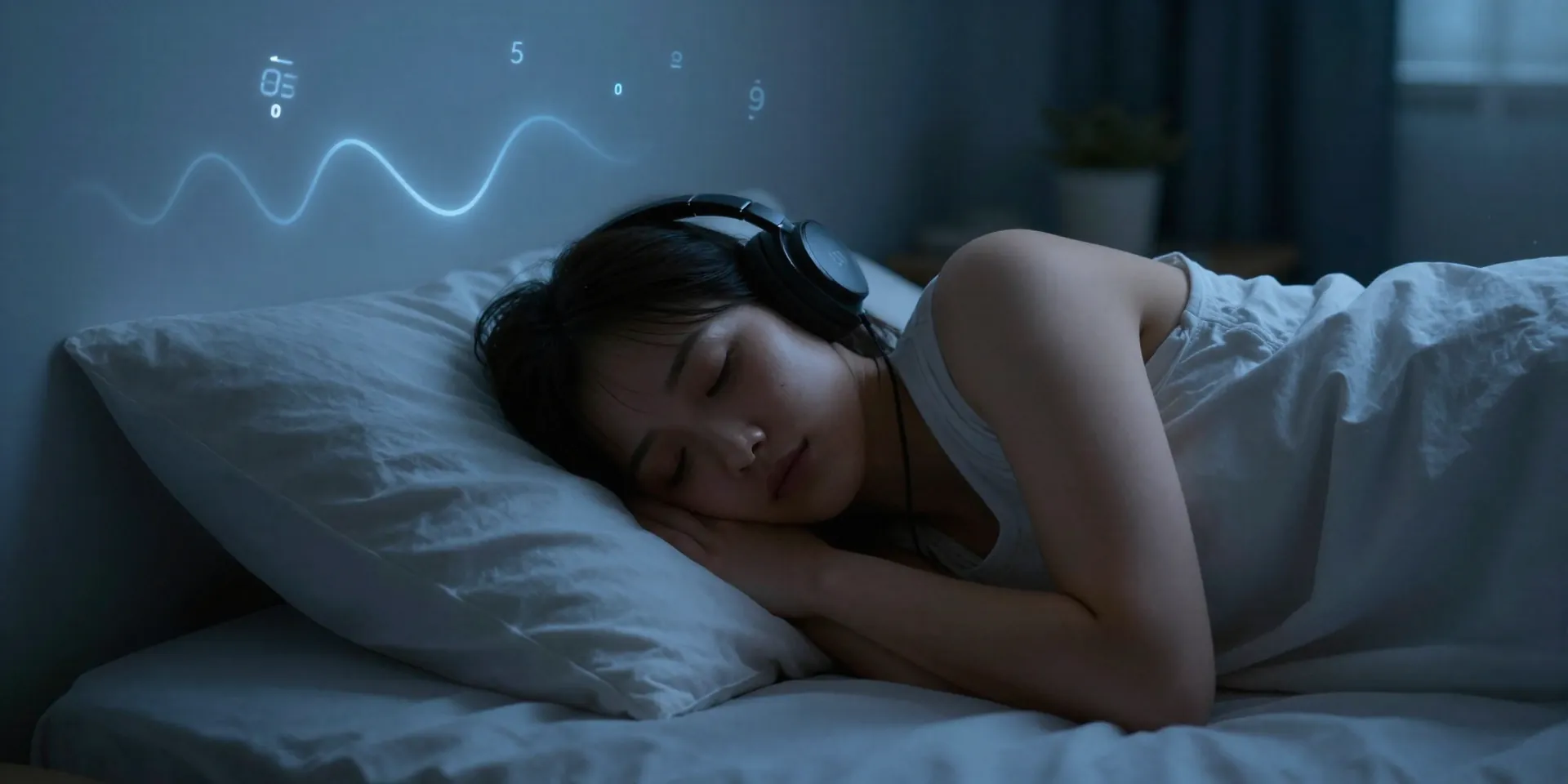
Why breath counting audio works when your brain refuses to shut up
Late-night overthinking has a very specific texture. It is not just “thinking too much.” It is your mind replaying conversations, inventing future disasters, doing fake problem-solving, and somehow getting louder the more tired you are. That is exactly where breath counting audio can help. It gives your attention one simple job: follow the breath and track the count. Not solve your life. Not improve yourself at 1:13 a.m. Just inhale, exhale, count, repeat.
The reason this works is almost annoyingly simple. Overthinking feeds on open loops and mental freedom. Breath counting narrows the runway. Audio helps even more because you do not have to generate the structure yourself when you are already fried. A steady voice, soft pacing, or subtle guided counting can interrupt the spiral without asking much from you. It is part focus tool, part anxiety sleep meditation, part permission slip to stop performing wakefulness. You are not trying to force sleep. You are creating mental quiet by giving the mind something boring enough to settle it and structured enough to keep it from wandering straight into panic.
Pick the right kind of audio or it will keep you awake
Not all sleep audio is useful. Some tracks are too cinematic, too spiritual, too chatty, or weirdly intense. If your goal is to stop late-night overthinking, you want something spare. Look for breath counting audio that uses a slow, steady rhythm, minimal background sound, and a voice that does not sound like it is trying to win an award. The best tracks usually count for you at first, then leave more space as you relax. Think gentle scaffolding, not constant commentary.
Watch out for a few common mistakes. Music with dramatic swells can pull your brain back into alert mode. Nature sounds are great for some people, but if they are too vivid, your attention starts chasing the rainstorm instead of resting. A meditation that asks you to visualize a glowing staircase to another dimension may be lovely at 4 p.m., less so when you are trying not to obsess over an awkward text. For sleep, plain wins. A calm voice, a slow count, long pauses, and no surprise volume changes. If you are sensitive to sound, try speaker playback at low volume instead of earbuds, or use a sleep headband so you are not distracted by discomfort.
Use a counting pattern that calms you instead of making you perform
Here is the version that works for most people: inhale naturally, exhale naturally, count “one” at the end of the exhale. Then “two” on the next exhale, and so on up to five or ten before starting over. That is it. You do not need Olympic lungs. In fact, trying to breathe too deeply can make you feel tense or lightheaded, especially if anxiety is already in the mix. A natural breath with a counted exhale tends to be more settling because it does not turn bedtime into a breathing exam.
If guided counting makes you oddly competitive, simplify. Count only from one to four, then reset. If you lose track, good. That usually means the mind loosened its grip for a second. Start again without drama. Breath counting audio should reduce effort, not add another thing to fail at. A decent anxiety sleep meditation will often pace the breath slowly enough to encourage a longer exhale, which can help the body downshift. But never force the rhythm if it feels uncomfortable. The whole point is mental quiet, not perfect technique. Easy, repetitive, almost dull. That is the sweet spot.
What to do when your thoughts keep barging in anyway
Thoughts will still show up. Of course they will. The trick is to stop treating every thought like a meeting request. When a worry cuts in, do not argue with it, analyze it, or try to replace it with positive affirmations. Just notice that you got pulled away, and return to the next breath count in the audio. That return is the practice. Not the absence of thoughts. The return.
Actually, one of the fastest ways to stay awake is to get irritated that the method is not “working” after three minutes. Sleep does not love pressure. If your mind keeps reloading the same problem, give it a tiny label like “planning,” “replaying,” or “catastrophizing,” then go back to the count. No speech. No self-therapy session. Just a quick tag and back to the rails. If emotions feel sharp, it can help to place one hand on your chest or stomach while the audio plays. That little bit of physical feedback makes the breath easier to follow and reduces the floaty, mental feeling that overthinking thrives on.
Set up your bedroom so the audio can do its job
Even the best breath counting audio has limits if your setup is chaotic. If your phone is buzzing, your room is too warm, and you are doom-scrolling between breathing rounds, the audio is being asked to fight uphill. Make the environment easier. Put the phone on do not disturb. Lower the brightness before you even get in bed. Queue the track in advance so you are not shopping for the perfect meditation while half asleep and half irritated. Small stuff matters here.
Timing matters too. Start the audio when you notice your brain revving, not after 45 minutes of wrestling with it. You want to catch the spiral early, when thoughts are still sticky but not fully feral. If you often wake in the middle of the night with your mind racing, keep one reliable track saved and ready so you do not have to make choices in the dark. Decision-making wakes you up. Familiarity helps you wind down faster. The goal is to build a boring, repeatable cue: bed, track, breath, count. Night after night, your nervous system starts recognizing the pattern.
Make it a repeatable habit so your brain stops treating bedtime like open office hours
One good night with breath counting audio is nice. What really changes things is repetition. Your mind learns by association. If you only reach for a sleep track when things are already a mess, it can still help, but it will feel like emergency care. If you use it regularly, even on nights that seem fine, it starts becoming a cue for shutting down mental chatter before it gathers momentum.
That does not mean you need a rigid, precious routine with seventeen steps and a special candle. Keep it lean. Same general bedtime. Same audio or same style of audio. Same basic counting method. Over time, your brain starts to recognize that counting breaths means the workday is over, the social postmortem is over, the imaginary arguments are over. And if a night goes badly anyway, do not turn that into a story about being broken or “bad at meditating.” Some nights are noisy. The win is that you have a clean, practical tool for getting back to mental quiet without feeding the overthinking machine.